Endocrine Procedures & Nuclear Medicine
Endocrine Imaging & Diagnostics
What We Do In-Clinic
At Endocrinology Nuclear Medicine Associates, we are proud to provide our patients with a range of endocrine procedures, making it convenient to access the care needed for most endocrine disorders and diseases.
Here’s a look at the procedures we offer at our clinic:
Continuous Glucose Monitoring Studies
For patients with diabetes, participating in a continuous glucose monitoring study can significantly improve daily diabetes management by using a continuous glucose monitor (CGM). This discreet device is worn on the body to track blood sugar levels in real time. This technology replaces the need for frequent finger pricks with easy monitoring via a smartphone. CGMs alert users when their blood sugar levels are rising or falling, allowing for timely action to prevent serious complications like hypoglycemia (low blood sugar) or hyperglycemia (high blood sugar).
Bone Density Scan (DEXA Scan)
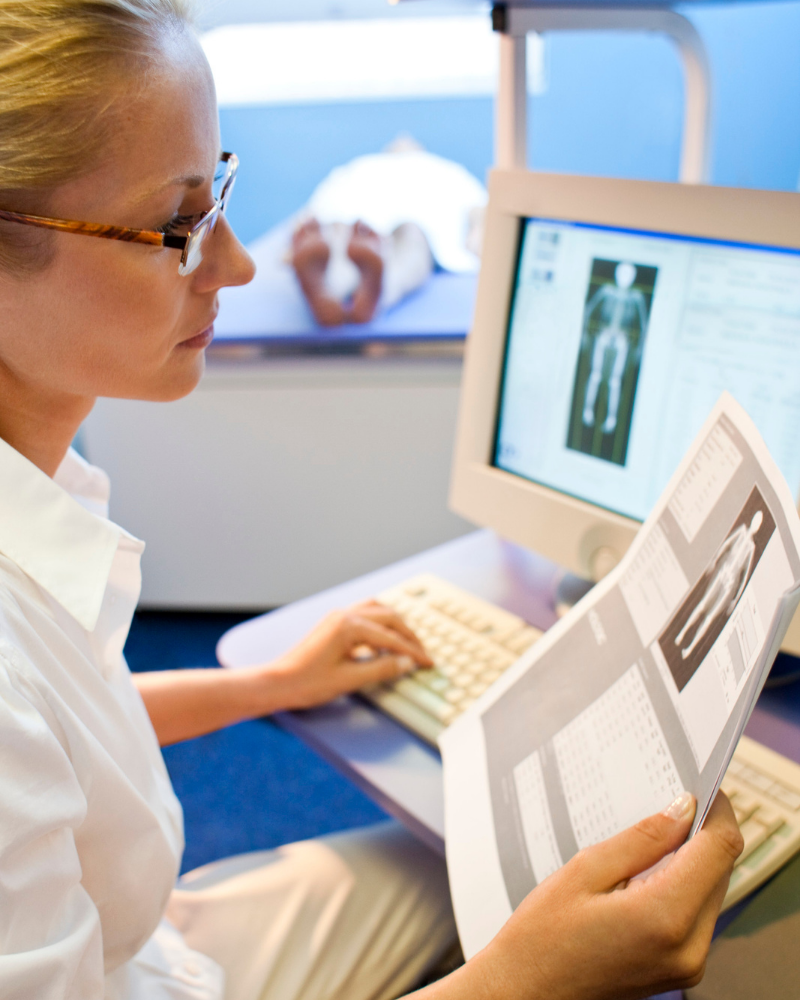
A Dual-Energy X-ray Absorptiometry (DEXA) scan measures the bone mineral density of bones by passing both high-energy and low-energy X-rays through the body. This quick and painless procedure is essential for diagnosing and monitoring the potential weakening of bones, which can develop into conditions such as osteopenia and osteoporosis.
Fine Needle Aspiration (FNA)
Fine needle aspiration (FNA) is a type of biopsy procedure in which a thin needle is used to collect tissue samples. This process allows us to make precise diagnoses, including checking for thyroid cancer.
Ultrasound
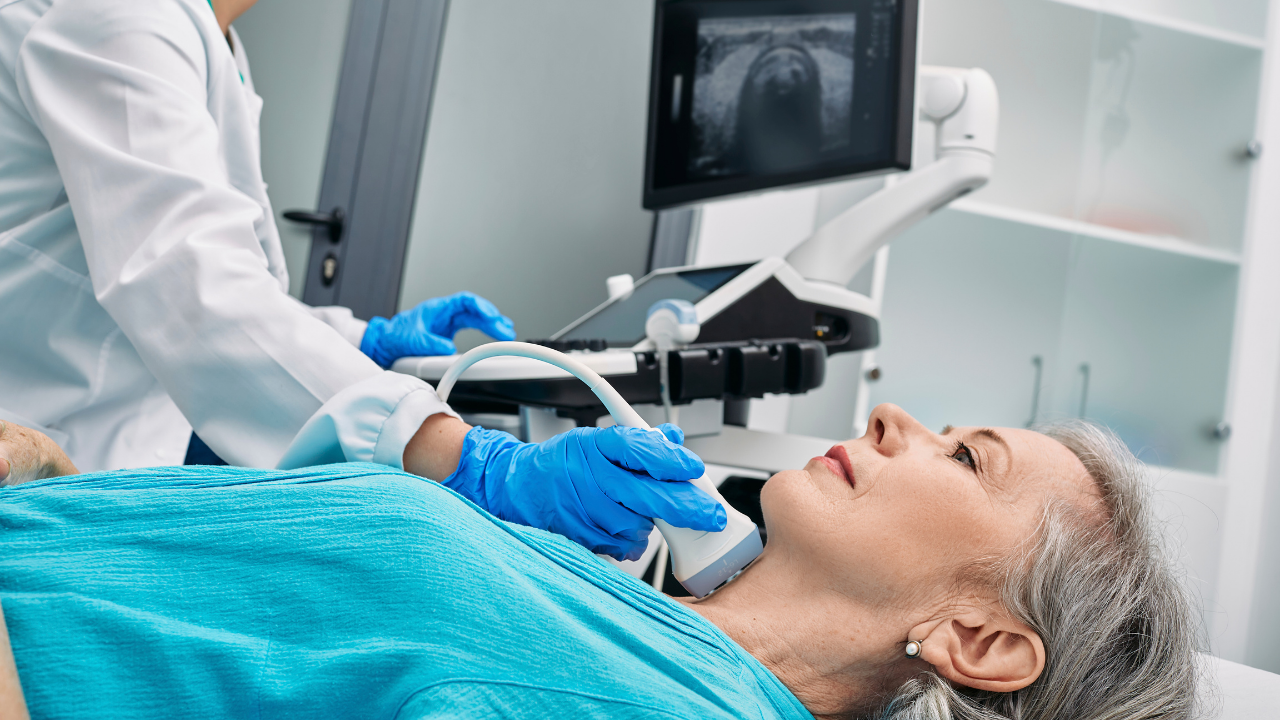
An ultrasound is a simple and painless imaging method that utilizes sound waves to produce an image of an internal organ. This technique is particularly effective for evaluating the thyroid, providing a clear picture of its shape, size, and position. It’s the best way to identify any abnormalities, including nodules or cysts, without any radiation exposure.
What Is Nuclear Medicine?
Nuclear Imaging for Disease Diagnosis, Evaluation and Treatment
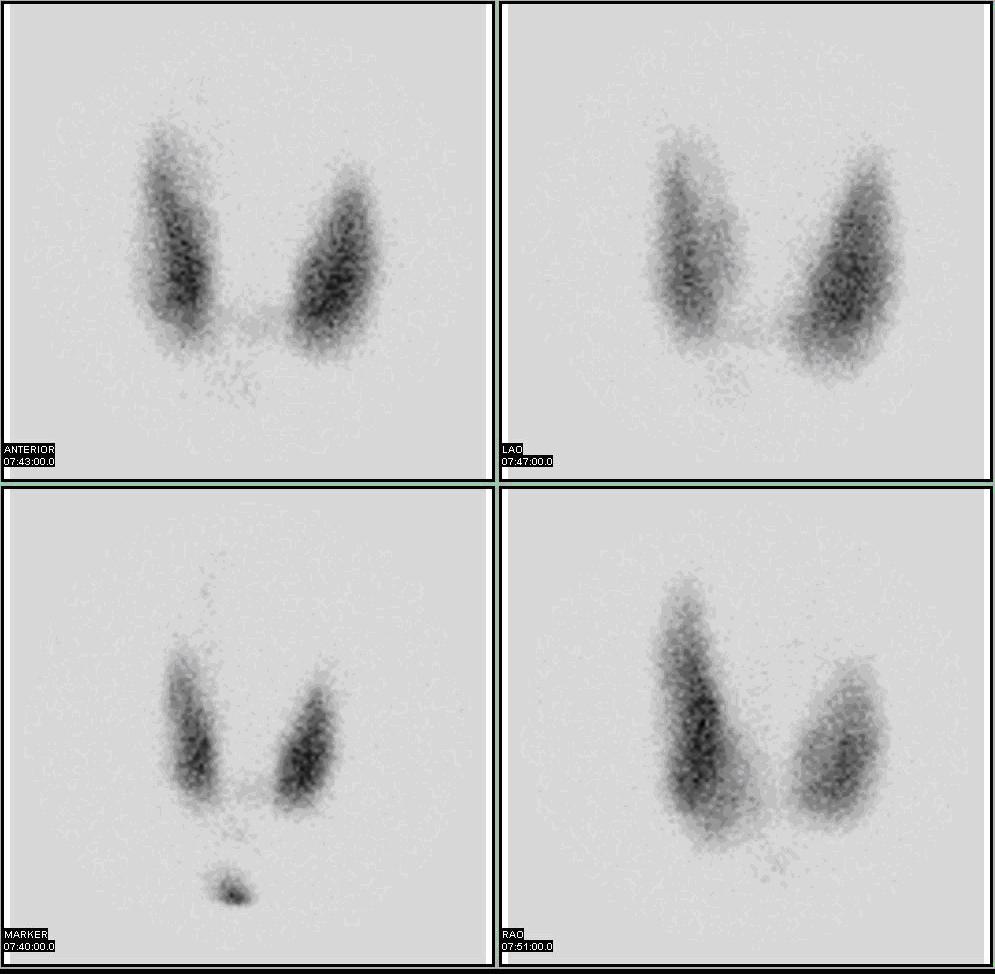
Nuclear medicine is a specialized branch of radiology that helps to assess how organs and tissues in the body are functioning. This is done through nuclear imaging. For most nuclear imaging diagnostic procedures, a small amount of radioactive material called a tracer or radiotracer is administered by a healthcare provider or radiology technologist — a healthcare professional with special training to use radiation for diagnosis and treatment. Tracers are typically injected, swallowed, or inhaled. After the tracer is inside the patient’s body, the provider or technologist uses a specialized camera to detect the radiation emitted from the tracer. How the tracer interacts with the body and is absorbed will give the provider or technologist information on how well organs or tissues are functioning.
Nuclear imaging is incredibly valuable for diagnosing and treating a range of conditions, such as thyroid issues, bone disorders, and cancer, among others. By providing clear insights into a patient’s internal health, nuclear medicine plays a crucial role in finding signs of disease in its earliest stages, developing personalized and targeted treatment plans, and monitoring a patient’s response to treatment. If you’re curious about how this technology could benefit you or a loved one, please reach out for more information.
Quick Facts
- Nuclear medicine is a medical imaging specialty that uses radioactive materials for diagnosis, evaluation, and treatment.
- It is most often used for diagnosing and treating cancer, brain disorders, and certain heart conditions.
- Common radioactive substances used in nuclear medicine include technetium-99m, iodine-131, fluorine-18, and gallium-67.
Nuclear Medicine Treatment
What is Radioactive Iodine (I-131) Therapy?
Radioactive iodine therapy, specifically using iodine-131, is a common and trusted treatment for people dealing with an overactive thyroid or thyroid cancer. In this therapy, a small capsule is taken that contains the radioactive iodine. Once it enters the body, the thyroid gland absorbs it, allowing the treatment to specifically target and eliminate the unhealthy thyroid tissue while keeping the surrounding healthy areas safe. One of the reassuring aspects of this therapy is that the radioactive material is gradually eliminated from the body through saliva and urine within a few days, ensuring a safe recovery process.
Ready to schedule a visit?
Call us at (210) 233-5483 or request an appointment online.